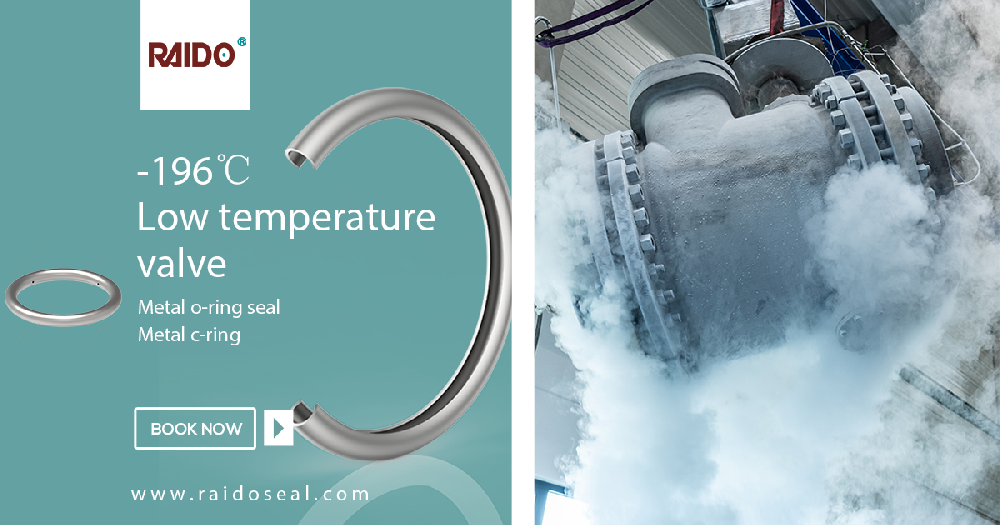
In the industrial sector, cryogenic valves play a crucial role, widely used in scenarios such as the production, storage and transportation of liquefied natural gas (LNG), air separation equipment, and scientific research. In these applications, valves are required to control the flow of cryogenic media such as liquid air, liquid oxygen, liquid nitrogen, and liquefied natural gas. However, under extremely low-temperature environments, the sealing of cryogenic valves faces a series of severe challenges.
When the temperature drops to an extremely low level, ordinary sealing materials undergo changes in physical properties. For example, common rubber sealing materials harden and become brittle rapidly at low temperatures, losing their original elasticity and flexibility, which leads to a significant decline in sealing performance and inability to effectively prevent medium leakage. Moreover, cryogenic media often have special chemical properties—some are highly oxidizing, such as liquid oxygen, while others are corrosive, like certain cryogenic liquids. These characteristics require sealing materials to withstand not only the test of low temperatures but also chemical erosion; otherwise, they are prone to corrosion and damage, triggering potential safety hazards. In addition, cryogenic valves also need to withstand pressure changes during operation, and frequent opening and closing operations exert mechanical stress on sealing components. Under the combined action of low temperature and pressure, the reliability of the sealing structure faces great challenges. Once the seal fails, it may cause the leakage of cryogenic media, which not only results in energy waste but also may trigger serious safety accidents such as fires and explosions, posing a huge threat to personnel and equipment.
Dilemma of Ordinary Sealing Rings at Low Temperatures
Facing the sealing requirements of cryogenic valves, ordinary sealing rings expose many insurmountable defects. In terms of material properties, common ordinary rubber sealing rings, whose main component is high molecular polymer, see a sharp decrease in the mobility of molecular chains at low temperatures. This enhances the intermolecular forces of rubber, making the originally soft and elastic rubber gradually become stiff and hardened. When the temperature drops to a certain level, ordinary rubber sealing rings become extremely brittle and are prone to cracking under slight external forces, such as mechanical stress generated by valve opening and closing actions, resulting in complete loss of sealing function.
Chemical stability is another major problem for ordinary sealing rings at low temperatures. The chemical activity of cryogenic media may change under low-temperature environments; some media that are relatively chemically stable under normal conditions may erode ordinary sealing materials at low temperatures. Ordinary rubber sealing rings lack sufficient chemical erosion resistance. When exposed to highly oxidizing liquid oxygen, the double bonds in rubber molecules are easily oxidized, leading to material aging and deterioration, and a subsequent decline in sealing performance. When facing corrosive cryogenic liquids, ordinary rubber is more likely to be corroded and dissolved, failing to maintain the integrity of the sealing structure and thus causing medium leakage.
In addition, ordinary sealing rings have poor fatigue resistance at low temperatures. Frequent opening and closing operations of cryogenic valves subject ordinary sealing rings to continuous alternating stress. In low-temperature environments, ordinary sealing rings, due to reduced elasticity, cannot effectively buffer such stress changes, and cracks are prone to occur in stress-concentrated areas. With the increase in the number of opening and closing cycles, the cracks gradually expand, eventually leading to complete damage of the sealing rings, which greatly shortens their service life and fails to meet the demand for long-term stable operation of cryogenic valves.
Performance Advantages of Shanghai Raido Metal Sealing Rings
(1) Excellent Low-Temperature Resistance
In the application of cryogenic valves, Shanghai Raido metal sealing rings demonstrate unparalleled low-temperature resistance. When in an extremely low-temperature environment of -196℃, ordinary sealing materials have long lost their sealing capacity due to the low temperature, but Shanghai Raido metal sealing rings can maintain good strength. This is attributed to their special metal material formula and precision manufacturing process, which ensure that their internal crystal structure remains stable at low temperatures, effectively inhibiting the embrittlement of the material. Even under frequent temperature fluctuations, they can always maintain stable sealing performance, ensuring the reliable operation of cryogenic valves in ultra-low temperature environments and avoiding medium leakage caused by seal failure.
(2) Strong Chemical Resistance
These metal sealing rings possess strong chemical resistance and can withstand chemical erosion from various cryogenic media. When exposed to highly oxidizing liquid oxygen, they will not be oxidized and damaged like ordinary materials; the dense oxide film formed on their metal surface can effectively prevent further oxidation reactions and maintain material integrity. For corrosive cryogenic liquids, they rely on their stable chemical properties and do not react chemically with or dissolve in these media, ensuring that the sealing performance is not affected by chemical factors during long-term use. Whether in common cryogenic media such as liquid oxygen and liquid nitrogen, or in other cryogenic liquid environments with special chemical properties, Shanghai Raido metal sealing rings can work stably, providing reliable sealing guarantee for cryogenic valves and greatly extending the service life of valves in complex chemical environments.
(3) High Strength and Long Service Life
Shanghai Raido metal sealing rings have excellent compressive strength and fatigue resistance, which are key to ensuring the long-term stable operation of cryogenic valves. During the operation of cryogenic valves, they often face large pressure differences, and these sealing rings can withstand such high pressure differences without deformation or damage, ensuring the sealing effect of the valve under different pressure conditions. At the same time, during frequent opening and closing operations, ordinary sealing rings are prone to cracks or even breakage due to fatigue, but Shanghai Raido metal sealing rings can withstand tens of thousands of opening and closing cycles with their outstanding fatigue resistance. Under appropriate working conditions, they can be used continuously for many years without replacement, which greatly reduces maintenance costs and equipment downtime, improves the efficiency and economy of industrial production, and provides solid support for the efficient operation of cryogenic valves.
Practical Application Cases
The application effect of Shanghai Raido metal sealing rings in cryogenic valves of liquid nitrogen storage equipment is remarkable. A large chemical enterprise's liquid nitrogen storage system needs to open and close valves frequently every day to transport liquid nitrogen. In the past, when using ordinary sealing rings, the seals had to be replaced every 2 months on average, which not only incurred high maintenance costs but also posed the risk of liquid nitrogen leakage due to seal failure. After adopting Shanghai Raido metal sealing rings, during 5 years of operation, the sealing rings still maintained good sealing performance without any leakage problems, which greatly improved the operational stability and safety of the liquid nitrogen storage equipment and saved the enterprise a large amount of maintenance costs and economic losses caused by equipment shutdown.
Their performance advantages are also prominent in the application of cryogenic valves in liquid oxygen transmission pipelines. The liquid oxygen transmission pipeline of an aerospace fuel supply base operates at a pressure as high as 10MPa and a temperature as low as -196℃. Before using Shanghai Raido metal sealing rings, ordinary sealing rings frequently suffered from corrosion and seal failure due to their inability to withstand the strong oxidizing property of liquid oxygen and the low-temperature and high-pressure environment, which seriously affected the safe transmission of liquid oxygen. After replacing with Shanghai Raido metal sealing rings, after more than 3 years of continuous operation, these metal sealing rings successfully withstood the chemical erosion of liquid oxygen and the test of low temperature and high pressure, maintaining stable sealing performance, ensuring the safe and reliable transmission of liquid oxygen, strongly guaranteeing the stability of aerospace fuel supply, and providing solid support for the smooth development of relevant scientific research and production activities.
Conclusion and Outlook
To sum up, metal sealing rings, especially Shanghai Raido metal sealing rings, play a key role in the sealing application of cryogenic valves, successfully overcoming many drawbacks of ordinary sealing rings in low-temperature environments. Their excellent low-temperature resistance, strong chemical resistance, high strength, and long service life make them an important guarantee for the reliable operation of cryogenic valves. They also demonstrate significant advantages in practical application cases, effectively improving the operational stability and safety of relevant equipment and reducing maintenance costs.
Looking forward, with the growing global demand for clean energy, such as the continuous expansion of the LNG industry, and the in-depth development of fields such as aerospace and cryogenic scientific research, the demand for cryogenic valves and high-performance sealing materials will become increasingly strong. Relying on their unique performance advantages, metal sealing rings are expected to be widely applied in more emerging low-temperature fields, further promoting technological progress and development in related industries. At the same time, with the continuous innovation of materials science and manufacturing processes, the performance of metal sealing rings will be continuously optimized and improved, providing more solid support for the efficient and safe operation of low-temperature industrial equipment and playing a more important role in future industrial development.